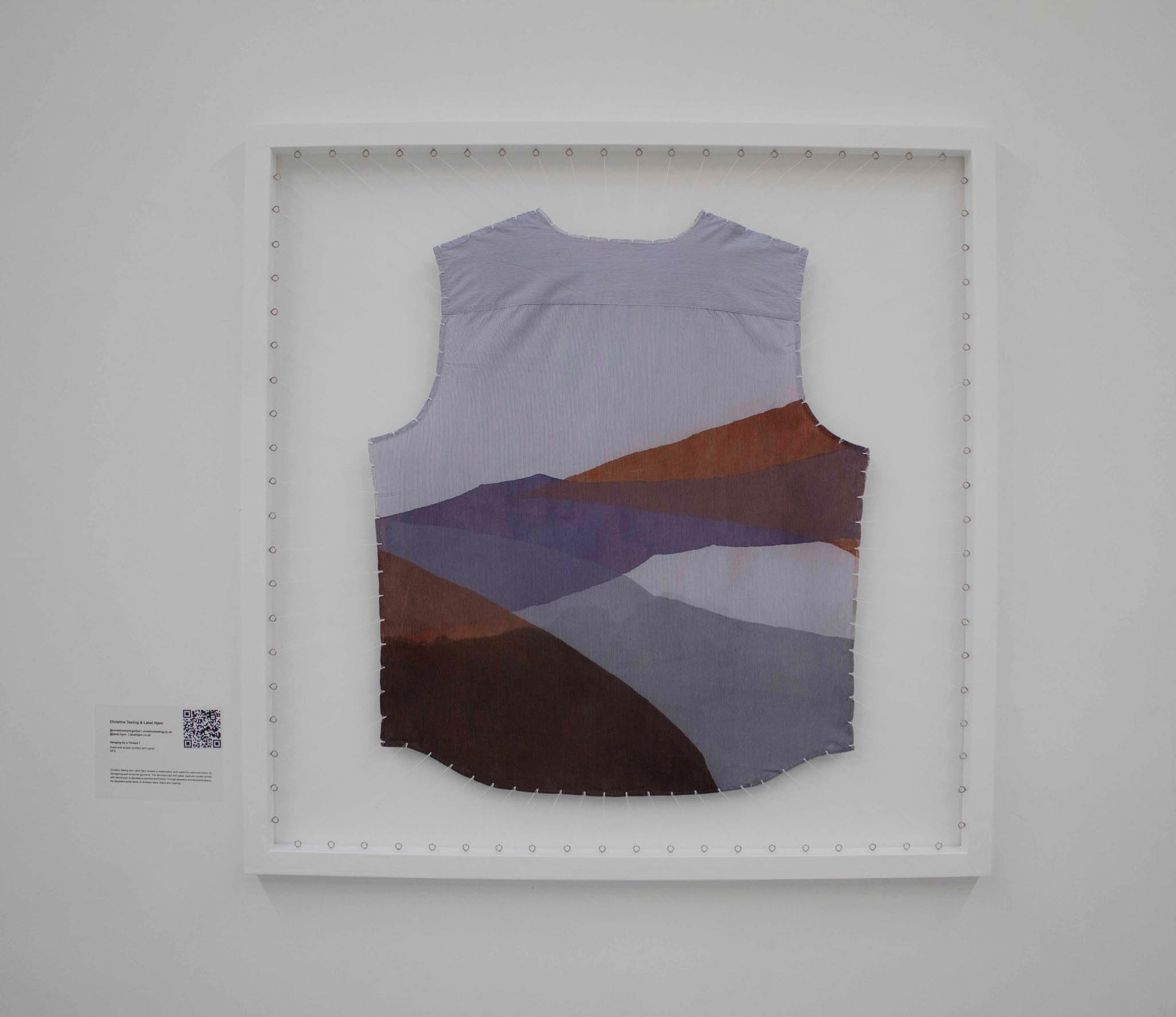
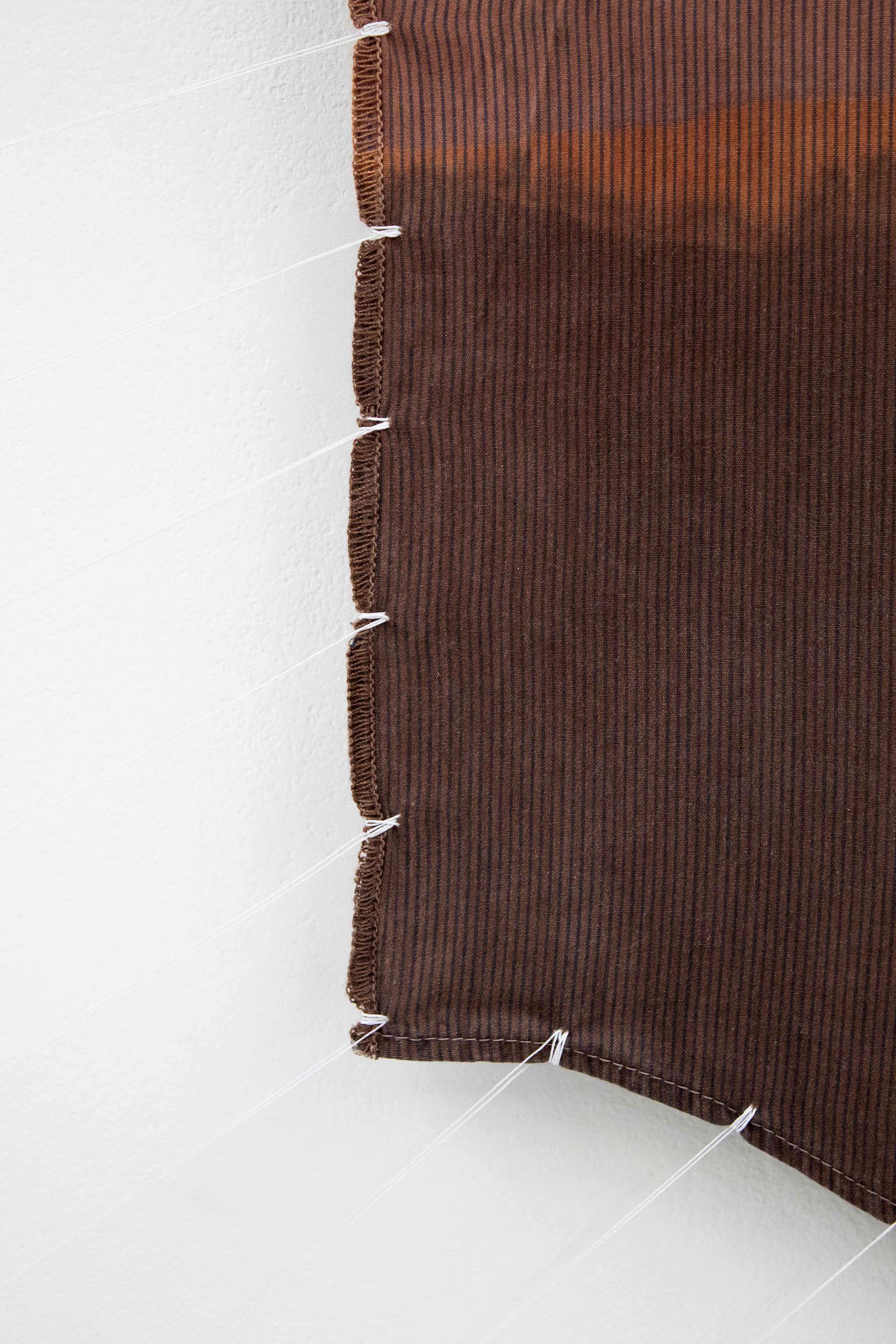
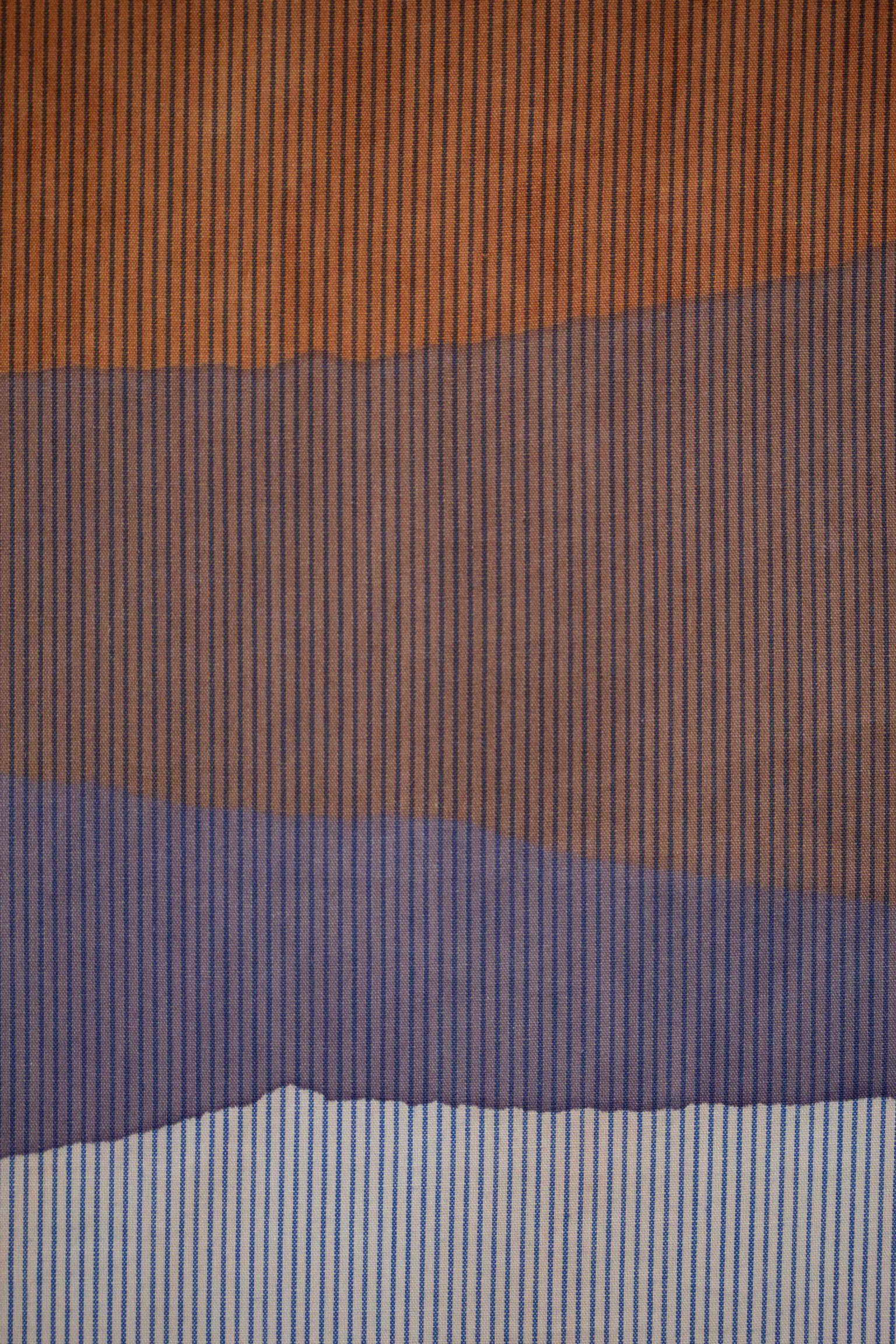
Christine Teeling and Label Hjem present their latest piece within RAW River Art Walk at Bainbridge Uncovered, The Handbag Factory, SE1, Friday 20th – Sunday 22nd March.
This collaborative work articulates a shared desire to challenge systems and value perception embedded within the fashion industry and to explore alternative narratives around consumption and waste.
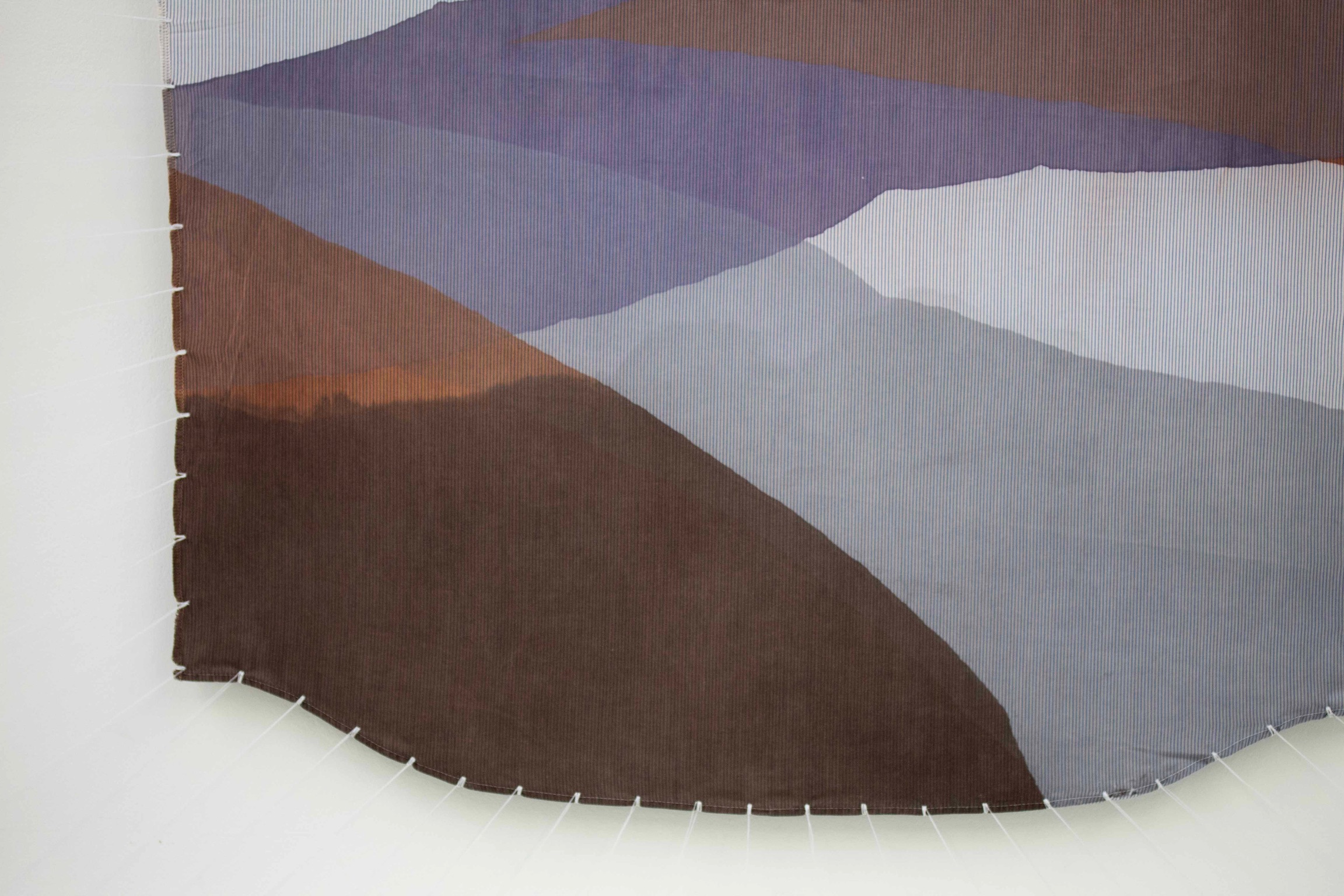
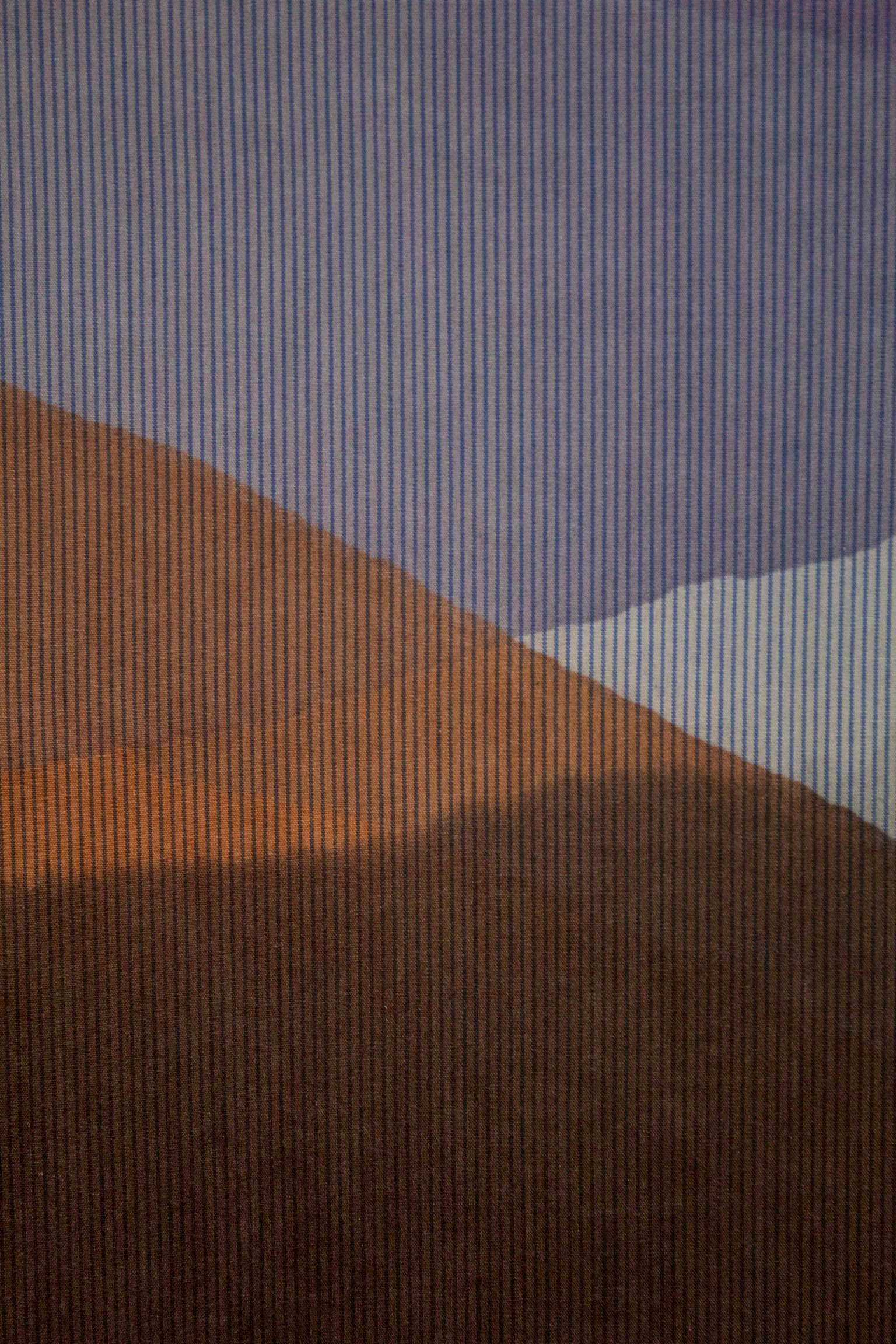
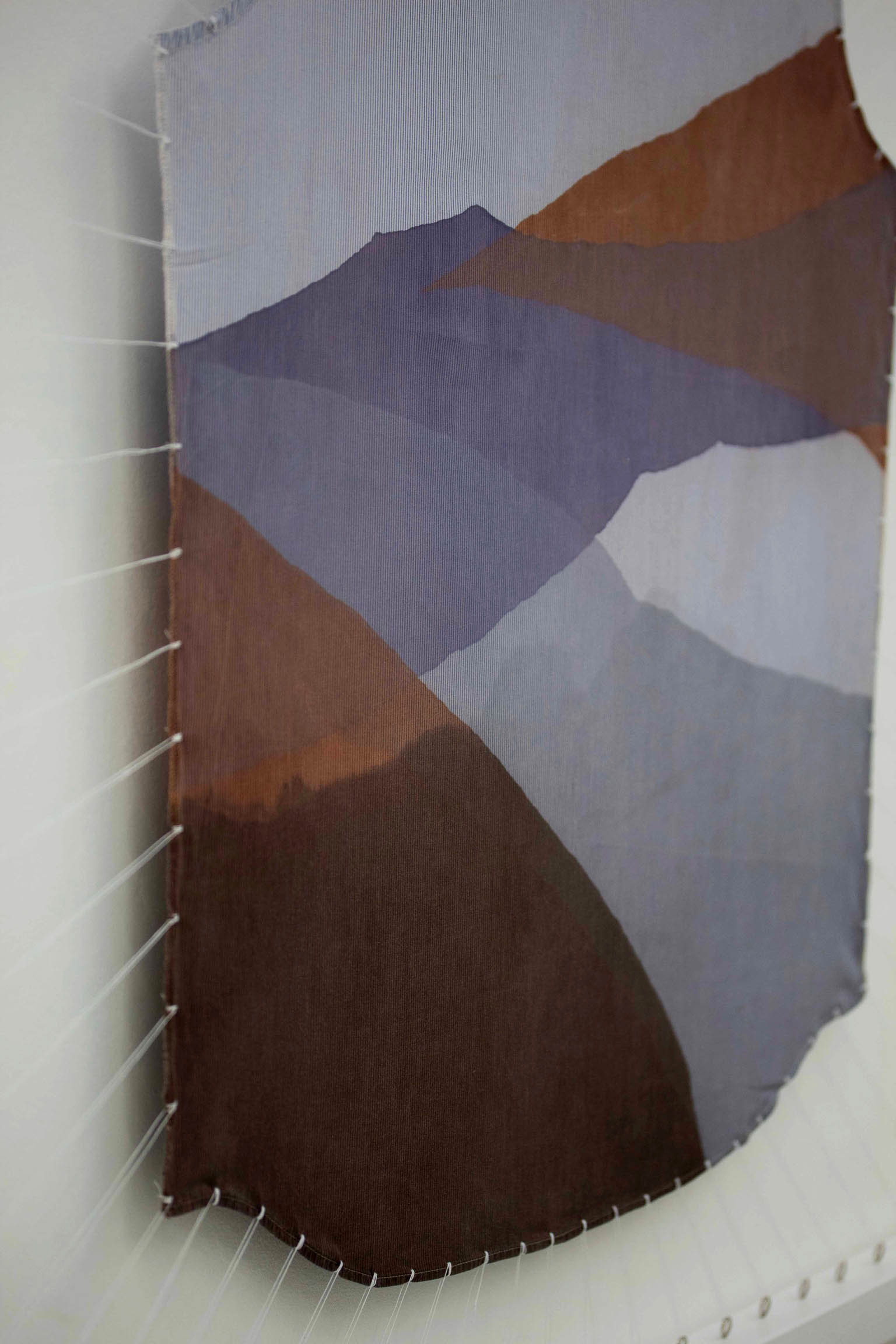
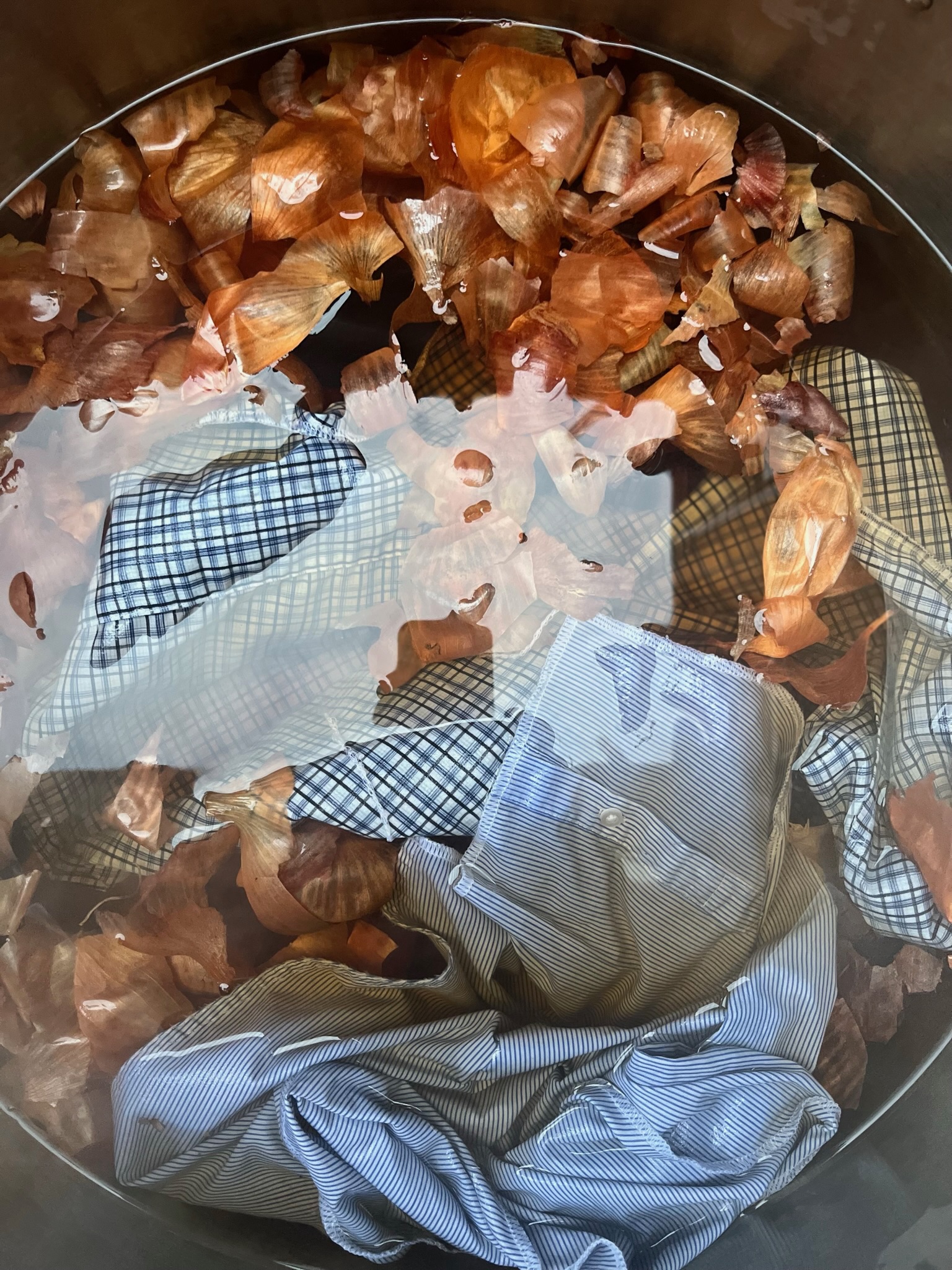
The deconstructed shirt is repurposed as a canvas for screen printing and hand painting with natural dyes. The colour, extracted and applied using traditional techniques introduces a slower, more mindful approach to making and enables the material to embody an alternative purpose.
The panel has been delicately suspended within the bounds of a frame, stretched out and decontextualised. It now feels illuminated and somewhat vulnerable in the separation from it’s kin panels, emphasising both the fragility and transformation of this once cherished item. Literally hanging by threads, the piece holds tension and a sense of unease.
The original garment, like much of contemporary textiles, is composed of a blended fibre mix, cotton and polyester. These blends reflect the realities of modern textile production and present challenges when working with natural dyes, which typically bond with fibres of a wholly natural origin such as cellulose or protein.
What began as an experiment evolved into a deeper exploration of material. While Christine’s work is typically centres on cellulose based fabrics, working with blended textile mixes posed no limitation, only opportunity to experiment. The material responded in it’s own way, producing subtle variations and inconsistencies in colour, texture and absorption that contribute to the individuality of the work.
Christine’s practice has been shaped by a shift from synthetic, chemically derived colour to natural sources, embracing seasonality, natural rhythm and tradition. Working directly with nature introduces unpredictability, collaboration and responsiveness to the environment, qualities that are integral to her work.
The process is patient and intuitive, allowing colour to emerge through interaction and layering, each contributing to the overall visual landscape. Natural dyes work harmoniously, creating a balance while responding uniquely to the material and to each other. From dye extraction to painting and printmaking, the process inspires a contemplative connection with nature.
Led by the existing, Label Hjem allows found material to evoke a creative workflow. Working solely with post-consumer items brings an unexpectedness to the practice of reworking and highlights abundant possibilities for alternative sourcing and layered processing including colour application, leading organically to a collaboration with Christine.
At the centre of this piece is a reflection on value, materially, culturally and ecologically. It invites the viewer to reconsider ideas of waste in the current age of disposability. Textiles were once treasured and passed down through generations loved, lived in, worked in and repaired. Every stage of this garment’s life, from the growing and harvesting of fibres to spinning, treatment, weaving, cutting and construction, carries the energy, labour and skill of both nature and human. Reframed, the piece offers an invitation to relook at the things we own.
OFF SEASON, MARGATE
Infinite Growth, 2026
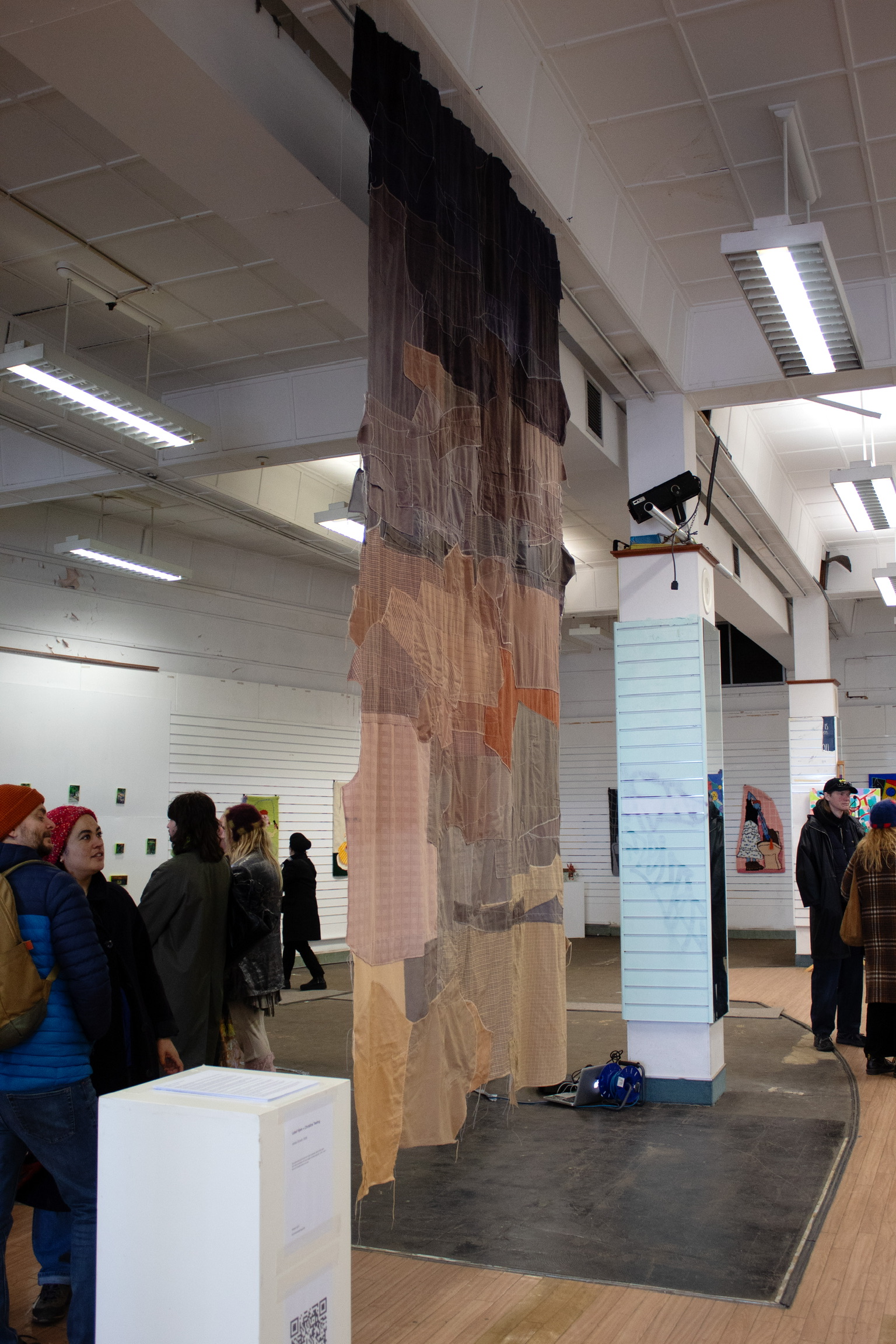
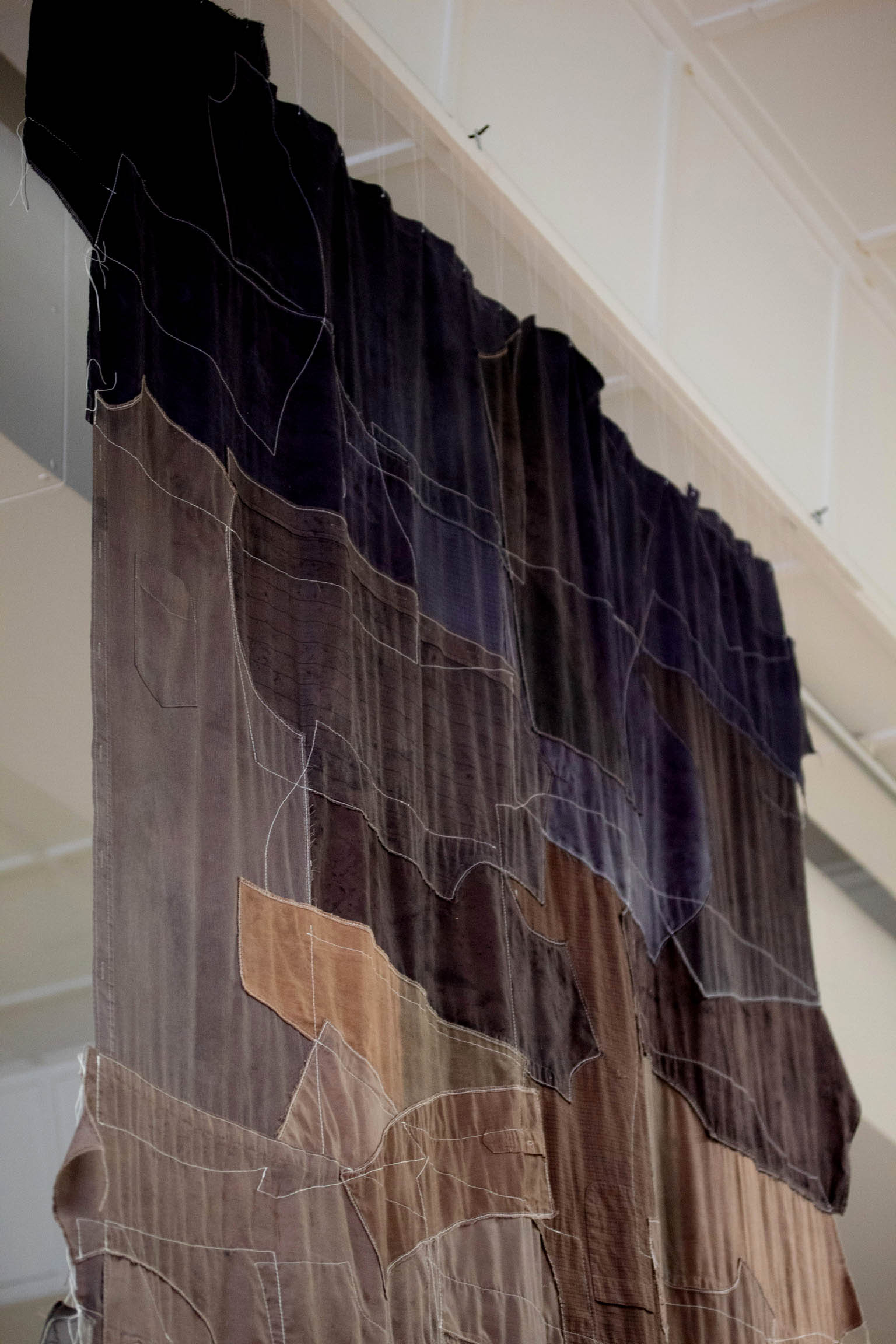
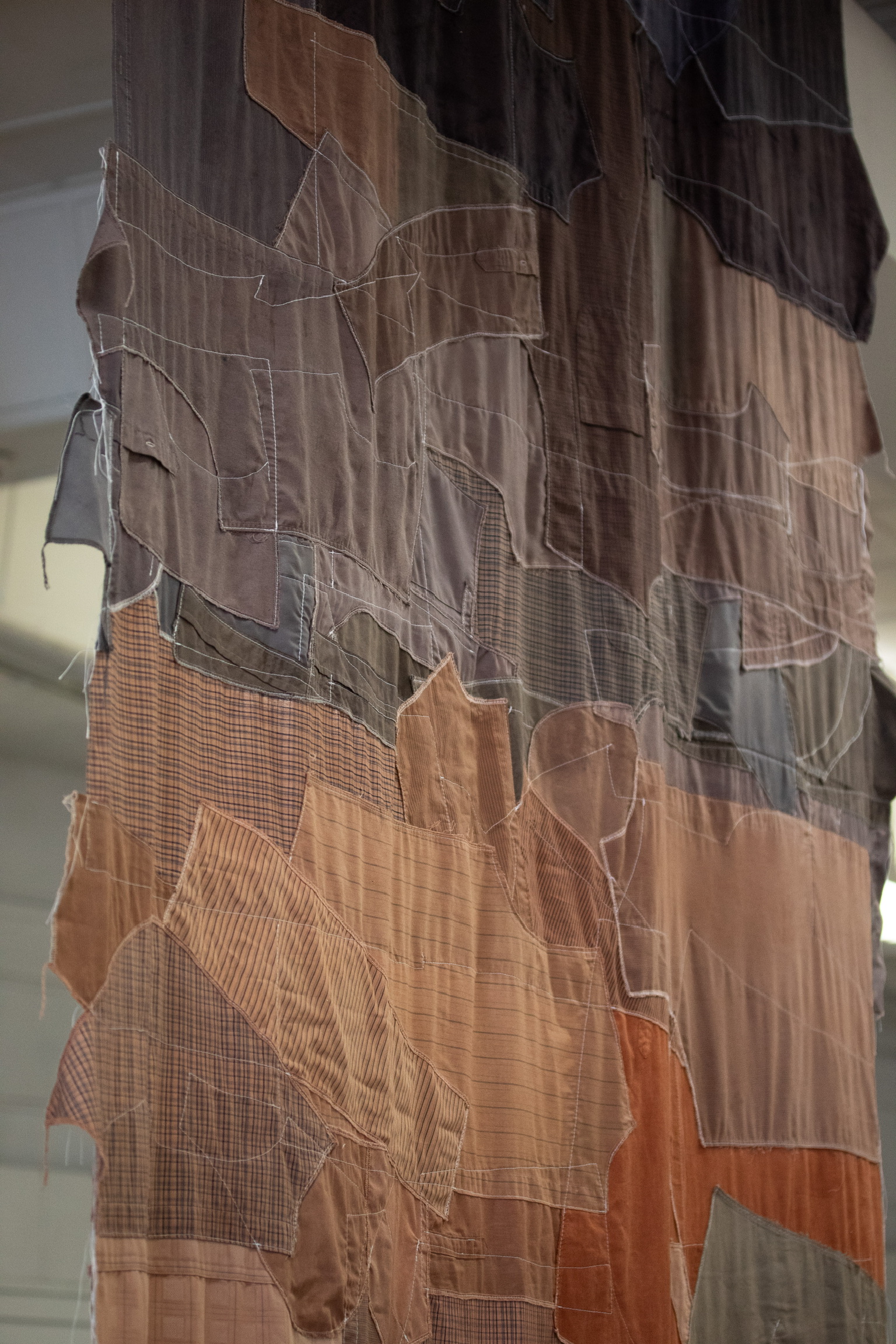
Christine Teeling and Label Hjem present their collaborative piece Infinite Growth as part of Off Season Margate 2026, examining overconsumption and shifting ideas of value through an exploration of heritage processes and alignment with nature.
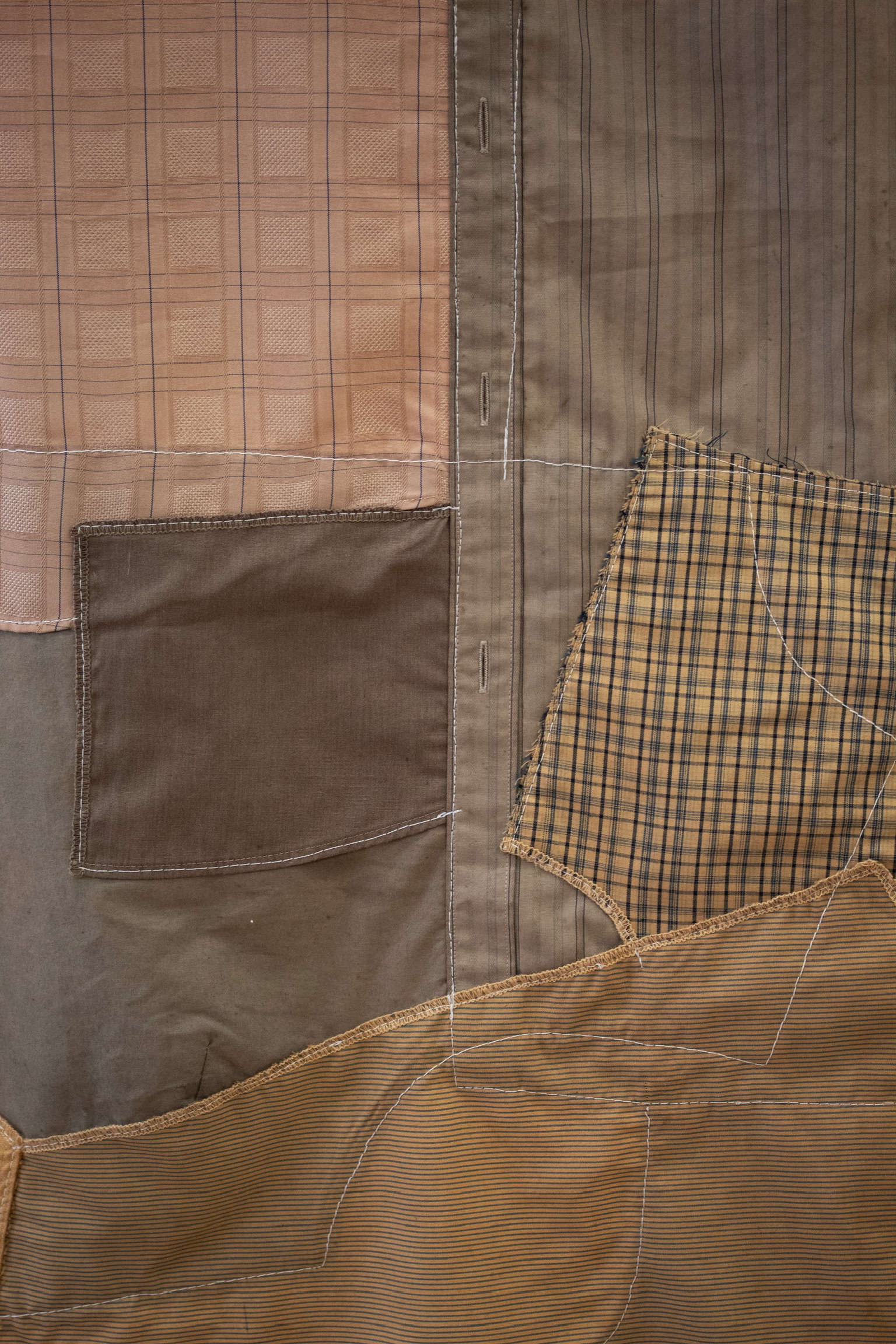
The tapestry presents an assembled curation of de-constructed, post-consumer shirts of varying everyday fibre compositions that, through artisanal hand-dying processes, have had colour applied using a palette of natural extracts and food waste.
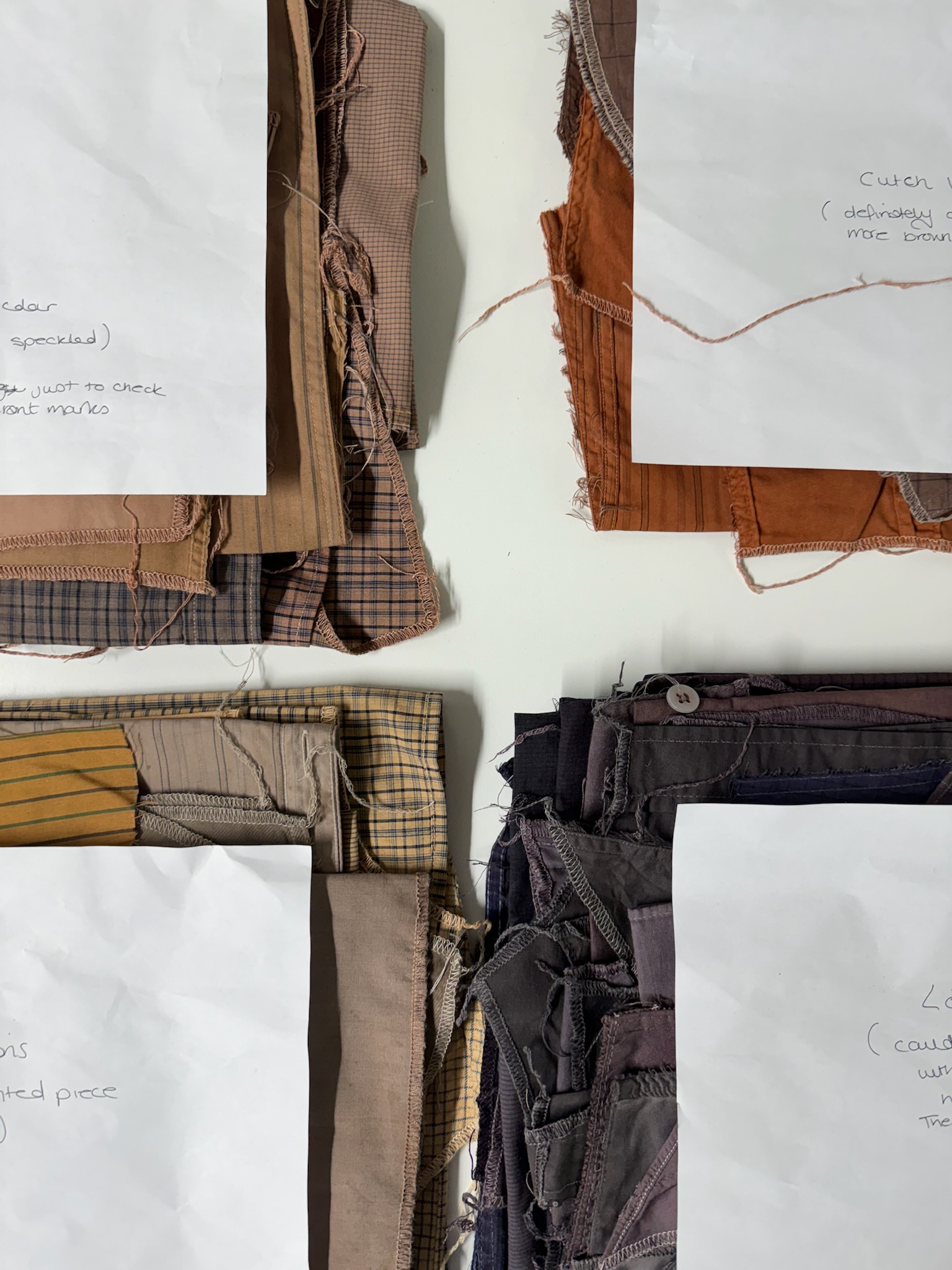
Textile panels have been dyed in recycled dye baths, allowing for variation in colour and depth. The colour was further altered through natural pH modifications using iron, vinegar and soda ash, producing a range of tonal blends and creating individual pieces that contribute to a larger, harmonious form. These were reconstructed and adorned with visible white stitching; an intentionally obvious technique to further celebrate the geometry of the shapes derived from original garment’s familiar silhouette.
Through the physical act of reworking and reimagining the fabrics, the artists hope to pose questions relating to value, material life cycles and the broader ecological and cultural implications of our waste; emphasising that value cannot be measured purely in economic terms, but is also found in the relationships we care for as part of a greater whole.
The collaboration grew out of their extensive experience and time working together in the fashion industry. It was the recognition of a strong synergy in their ethos that inspired this project; sharing and integrating evolving philosophies that prioritise alternative methods and processes, moving beyond extractive and harmful practices towards approaches that bring positive impact.
Christine’s approach to the work has been fundamentally shaped by a desire to shift away from toxic, chemical heavy processes and to embrace the seasonality, movement and mindfulness found in working with natural colour.
“Natural colour is a living energy, not fixed to a single moment, but continuously changing over its lifespan as it inhabits the textile fibre.
In my co-creation with natural colour, it invites me to reflect on the duality of sensitivity and perseverance present in the natural world. It asks me to take time, to observe and to harmonise, not just with the textiles themselves, but to the broader context in which they exist. In doing so, I am confronted with questions of significance and meaning.”
In redefining post-consumer garments, Label Hjem poses a challenging perspective of our own habits, attitude towards material goods and our thinking surrounding the world’s colossal waste issue.
“We tend not to consider what happens when we tire of a piece of clothing. Beyond the textile drop-off, we are given the gratitude of walking away knowing it is out of our hands, but are rarely faced with the reality of what happens to that garment, where it ends up and how it impacts other existences, livelihoods and environments.
Displaying the shirts in this way is confronting, but simultaneously exhibits the skill and labour of those who originally made it.”
When looking to the future, we can ask ourselves fundamental questions: What does value truly mean to us? How might we challenge the beliefs and assumptions we have long taken for granted, and in doing so change our greater collective understanding? In considering our place within the natural world, we are reminded that we are not separate from the larger ecosystems, but intertwined with them.

